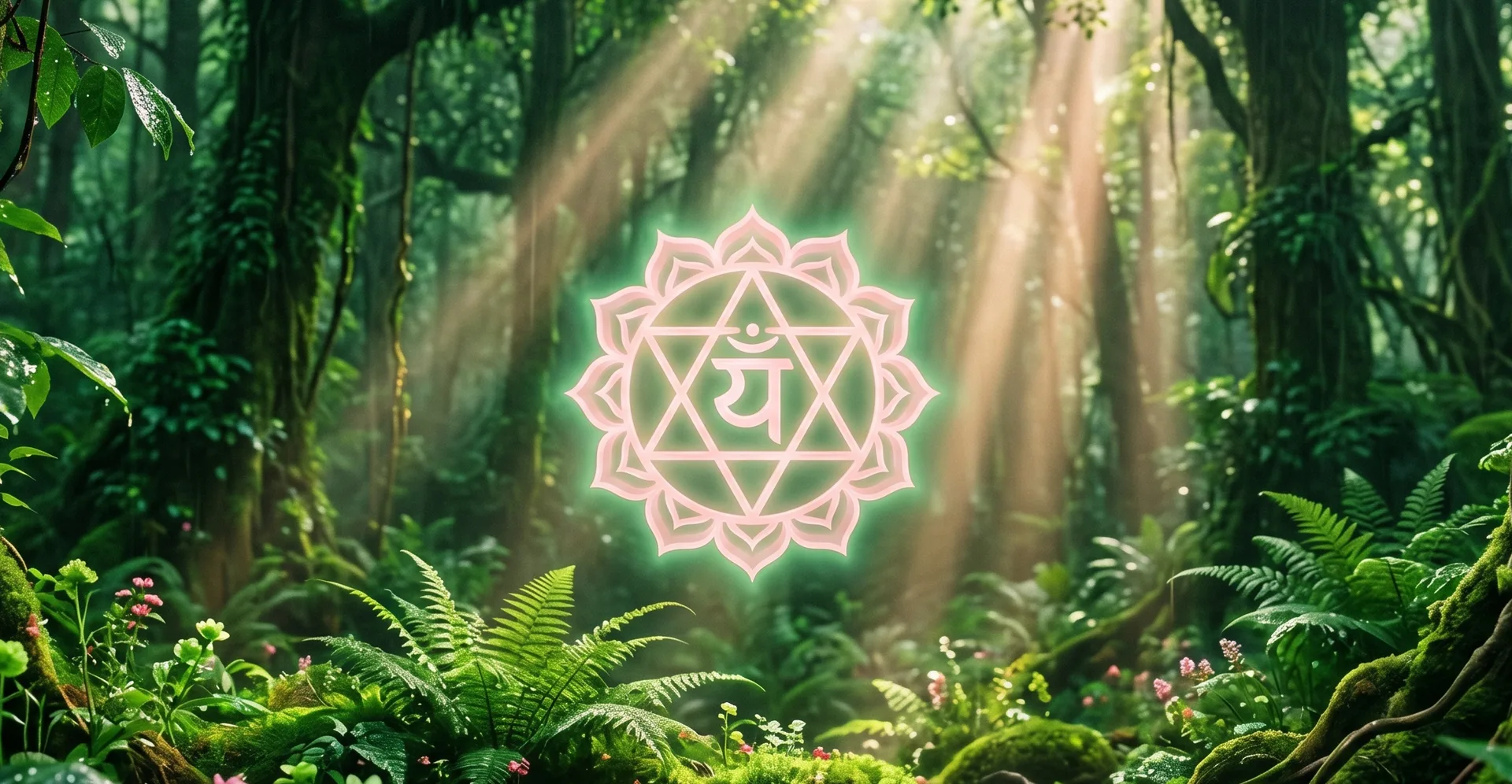

The Anahata Chakra, known as the heart center, is the fourth primary chakra in the human energy system. Located in the chest, it is responsible for the ability to love unconditionally, express compassion, and create harmonious connections with the surrounding world. When the Anahata chakra is balanced, a person experiences inner peace, trust, and deep emotional fulfillment. However, blocks in this center can lead to feelings of loneliness, resentment, and relationship problems. In this article, we will examine in detail the meaning of the Anahata chakra, signs of its imbalance, and effective practices for opening it.
What is the Anahata Chakra: Location, Symbols, and Characteristics
The Sanskrit name "Anahata" translates as "unstruck" or "unbroken sound," symbolizing the primordial vibration of love that exists without external influences. This energy center is located in the middle of the chest, at the level of the heart, between the third and fourth thoracic vertebrae. In a healthy state, the Anahata chakra is a sphere of energy about 6 cm in diameter, facing forward.
Посмотрите свой чакроанализ
Введите дату рождения — карта семи чакр за 30 секунд
Key characteristics of the Anahata chakra:
- Color: green (primary), in some traditions also pink or dark red.
- Element: air (Vayu), symbolizing lightness, mobility, and balance.
- Bija Mantra: YAM, pronounced with a vibration in the chest, corresponds to the note F (349 Hz).
- Symbol: a lotus with 12 petals, on which qualities are depicted: joy, peace, love, compassion, forgiveness, patience, and others. In the center of the lotus is a yantra — the shatkona (two intersecting triangles forming a Star of David), symbolizing the unity of masculine and feminine principles.
- Animal Symbol: antelope or black gazelle, embodying grace and freedom.
- Ruling Planet: Venus, associated with harmony and beauty.
- Endocrine Gland: thymus (thymus gland), regulating the immune system.
- Body Organs: heart, lungs, bronchi, circulatory system, chest, arms, and thoracic spine.
Modern research, for example from the HeartMath Institute, confirms the connection of the Anahata chakra with physical health: the electromagnetic field of the heart is 5000 times stronger than that of the brain and influences immunity through heart rhythm coherence.
What the Anahata Chakra is Responsible For: Love, Compassion, and Balance
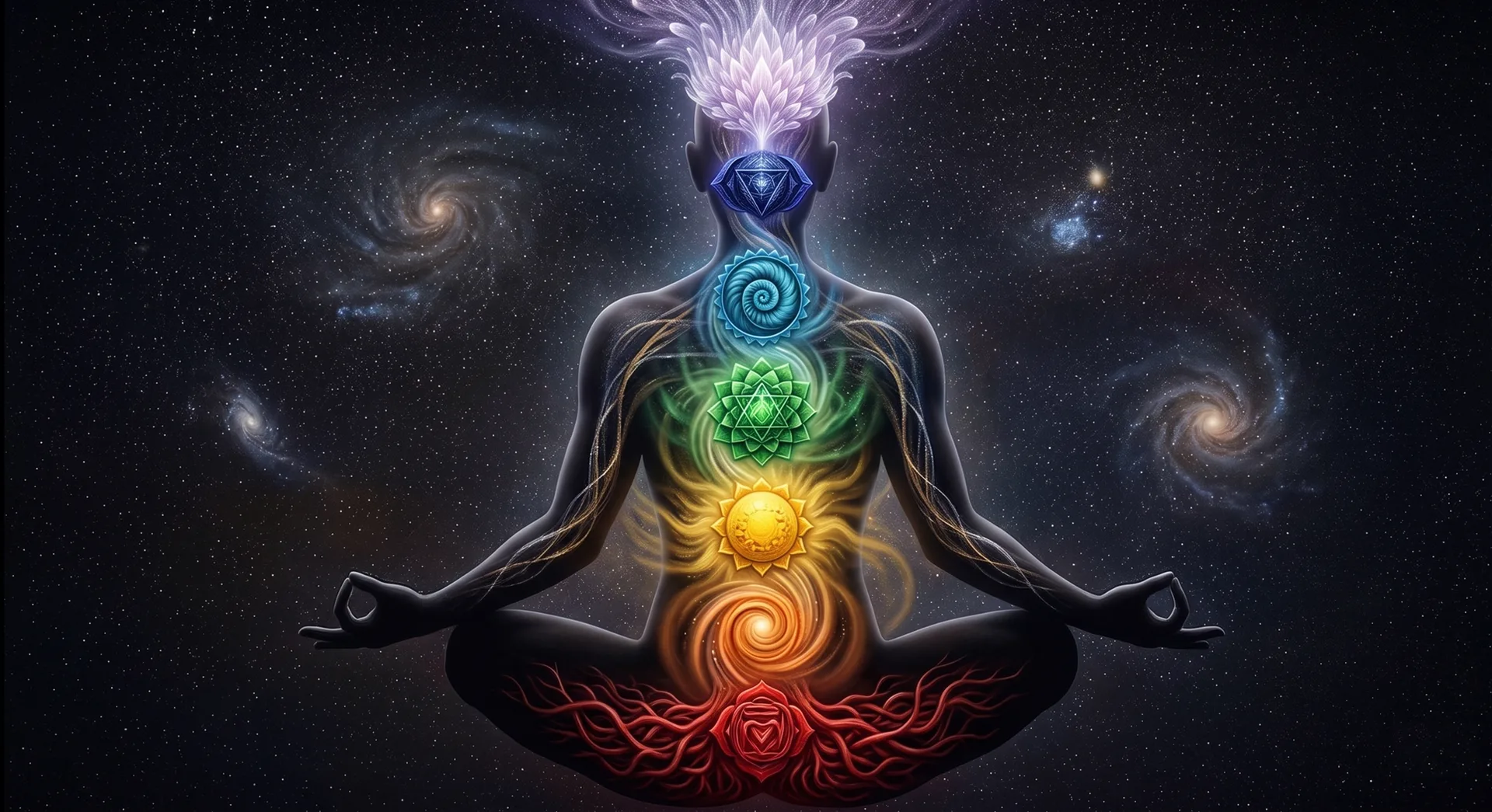
The Anahata chakra is a bridge between the lower chakras (Muladhara, Svadhisthana, Manipura), responsible for physical and emotional aspects, and the upper chakras (Vishuddha, Ajna, Sahasrara), associated with spirituality. It transforms coarse energy into higher qualities, such as unconditional love and empathy.
Main functions of the Anahata chakra:
- Unconditional Love: the ability to love and receive love without conditions or expectations.
- Compassion and Empathy: a deep understanding of other people's feelings without emotional burnout.
- Forgiveness: releasing resentments and negative emotions, cleansing the "weight on the soul."
- Harmony in Relationships: building healthy connections with partners, friends, and family.
- Self-Love: self-acceptance and respect for one's own needs.
- Unity and Connection: a sense of unity with the world and other people.
- Balance of Energies: balancing the material and spiritual aspects of life.
The Anahata chakra is also connected to breath and prana (life force), as its element is air. It accumulates energy and distributes it throughout the body via the blood and heart. According to the teachings of Swami Satyananda Saraswati, the formative age period for the Anahata chakra is 21–28 years, when the capacity for deep relationships develops.
Signs of a Balanced Anahata Chakra
When the Anahata chakra functions harmoniously, a person experiences a range of positive states that are reflected in all areas of life. Here are the key signs of a balanced heart chakra:
- The ability to love and be loved without conditions or fear.
- Deep compassion for others, not leading to emotional exhaustion.
- Ease in forgiving and letting go of resentments.
- Developed empathy and intuitive understanding of others' feelings.
- Openness, trust, and harmonious relationships in personal and social life.
- A sense of inner peace, gratitude, and bliss.
- Connection with oneself and others, a feeling of unity with the world.
- Joy, patience, kindness, and emotional stability.
- Serenity, acceptance of situations, and caring for others without self-sacrifice.
- Heightened sense of touch in the palms, related to the practice of anjali mudra (prayer gesture).
People with an open Anahata chakra often become the "heart" of their surroundings, creating an atmosphere of warmth and support.
Signs of a Blocked Anahata Chakra
Blockage of the Anahata chakra can manifest on psychological, physical, and behavioral levels. Recognizing these signs is the first step toward harmonization.
Psychological Symptoms
- Emotional closedness and fear of intimacy.
- Inability to forgive, accumulation of resentment and anger.
- Feelings of loneliness, alienation, and distrust of people.
- Cynicism, depression, or apathy.
- Low self-esteem and a feeling of being unworthy of love.
- Envy, jealousy, or hatred.
Physical Symptoms
- Heart problems: arrhythmia, hypertension, chest pain.
- Lung and bronchial diseases: asthma, bronchitis, frequent colds.
- Disorders in the thoracic spine: scoliosis, pain between the shoulder blades.
- Weakened immunity, frequent infections.
- Discomfort in the chest or arms.
Behavioral Symptoms
- Avoiding deep emotional relationships.
- Emotional dependence on a partner or, conversely, complete detachment.
- Inability to accept love and care from others.
- Difficulty expressing feelings and tenderness.
Signs of an Overactive Anahata Chakra
An excess of energy in the Anahata chakra is just as harmful as its deficiency. Overactivity manifests as excessive involvement in the emotions of others, which can lead to a loss of self. Key signs:
- Codependency: loss of personal boundaries in relationships.
- Rescuer Syndrome: an obsessive desire to "save" others, even without their request.
- Excessive self-sacrifice to the detriment of one's own needs.
- Emotional burnout due to constant care for others.
- Jealousy, possessiveness, and idealization of a partner.
- Violation of boundaries under the pretext of love.
- Arrogance or a sense of superiority due to a "big heart."
An overactive Anahata chakra is often found in people who fear loneliness and try to fill an inner void through relationships.
Causes of Anahata Chakra Imbalance
Imbalance in the heart center usually arises from emotional trauma and negative experiences that block the flow of love. Main causes:
- Loss trauma: death of a loved one, breakup, divorce.
- Betrayal, infidelity, or deception by trusted individuals.
- Emotional or physical abuse in the past.
- Lack of love and warmth in childhood, cold or detached parents.
- Harbored resentments, unprocessed grief, or unexpressed emotions.
- Defense mechanisms formed after wounds: "so it doesn't hurt, I close my heart."
- Chronic stress leading to a feeling of a "heavy heart."
Understanding the causes helps select targeted practices for healing.
Practices for Opening the Anahata Chakra
Harmonizing the Anahata chakra requires a comprehensive approach, including meditations, physical exercises, and emotional work. Here are 8+ effective practices.
1. Anahata Chakra Meditation
Step-by-step instructions for daily practice (15–20 minutes):
- Sit comfortably with a straight back, close your eyes, take several deep breaths.
- Focus your attention on the center of your chest, visualize a green light expanding like a sphere.
- Repeat the affirmation to yourself: "My heart is open to love and compassion."
- Imagine the green light filling your entire body, dissolving blocks and resentments.
2. Bija Mantra YAM
The YAM mantra is a powerful tool for activating the Anahata chakra. Practice as follows:
- Sit in a quiet place, place your hand on your chest.
- On the exhale, chant "YAM" with a vibration in the chest cavity, using the pitch of the note F (349 Hz).
- Start with a quiet sound, gradually increasing the volume.
- Repeat 108 times, using a mala for counting.
- Additionally, you can listen to sound therapy at 639 Hz, which harmonizes relationships.
3. Yoga Asanas for Opening the Chest
These poses help physically open the heart area and improve energy flow:
- Ustrasana (Camel Pose): backbend with hands on heels, opens the chest.
- Dhanurasana (Bow Pose): lying on the stomach, hold the feet and arch back.
- Bhujangasana (Cobra Pose): arch from the chest, lying on the stomach.
- Matsyasana (Fish Pose): backbend supported on the elbows, opens the throat and heart.
- Anahatasana (Heart Pose): on all fours, lower the elbow and hand to the floor, opening the chest.
- Gomukhasana (Cow Face Pose): hands clasped behind the back, stretches the shoulders and chest.
Perform 3–5 sets, holding each asana for 30–60 seconds.
4. Breathing Techniques (Pranayama)
Breath is the key to the air element, associated with the Anahata chakra:
- Anuloma Viloma: alternate nostril breathing, balances energy. Practice for 10 minutes daily.
- Bhastrika: bellows breath for activating prana.
- Heart Breathing: place a hand on your chest, breathe deeply, directing air into the heart area.
- Ujjayi: throat breathing with focus on the heart center.
5. Metta Meditation (Loving-Kindness)
This Buddhist practice develops compassion and love for all beings:
- Sit relaxed, close your eyes.
- Repeat phrases, directing them sequentially: to yourself ("May I be happy and free from suffering"), loved ones, neutral people, enemies, all living beings.
- Practice for 15 minutes daily to strengthen the Anahata chakra.
6. Forgiveness Practice
Forgiveness is essential for cleansing the Anahata chakra. Use methods:
- Write a letter to the offender, expressing all emotions (do not send it).
- Forgiveness meditation: visualize the person and mentally say: "I forgive you and release you."
- Ho'oponopono technique: repeat the phrases "I'm sorry, please forgive me, thank you, I love you."
7. Working with Stones and Crystals
Stones enhance the energy of the Anahata chakra:
- Rose Quartz: for self-love and healing emotional wounds.
- Green Aventurine: for balance and harmony.
- Emerald: develops compassion and wisdom.
- Malachite: for deep healing and transformation.
- Rhodochrosite or Rhodonite: promote forgiveness and emotional cleansing.
Wear stones on the chest as a pendant, meditate with them, or place them on the heart area.
8. Additional Practices
- Color Therapy: wear green or pink clothing, surround yourself with plants, visualize green light.
- Essential Oils: use rose oil (love), ylang-ylang (emotions), lavender (peace) in a diffuser or for chest massage.
- Nutrition: eat green foods (spinach, broccoli, avocado), drink herbal teas, consume bitter cocoa and nuts for heart health.
- Affirmations: repeat daily: "I am worthy of love," "My heart is open," "I forgive and release."
- Gratitude Journaling: write down 3 things you are grateful for, focusing on the feelings in your chest.
- Hugs and Tenderness: hug for at least 20 seconds to release oxytocin, place palms on the heart.
- Contact with Nature: walk in the forest, hug trees, listen to the sound of the wind — this activates the air element.
Connection of the Anahata Chakra with the Matrix of Destiny
In the Matrix of Destiny system, the Anahata chakra correlates with specific arcana and numbers that reflect its energy:
- Arcana 6 The Lovers: symbolizes love, choice, and harmony in relationships. This arcana is directly linked to the Anahata chakra's capacity for unconditional love and deep connections.
- Arcana 14 Temperance: embodies emotional balance, healing, and patience. It helps harmonize the Anahata chakra, especially during overactivity or blocks.
- Arcana 17 The Star: connected to hope, inspiration, and spiritual connection. This arcana supports the opening of the Anahata chakra, enhancing the feeling of unity with the world.
In numerology, the Anahata chakra is also reflected by the numbers 6 (love), 9 (compassion), 14 (balance), and 17 (inspiration). Analyzing these arcana in your Matrix of Destiny can provide additional insights for working with the heart center.
Anahata in Chakra Analysis
Chakra analysis is a modern diagnostic method based on numerology that allows for assessing the energetic state of all seven main human chakras. It uses calculations based on the date of birth to identify strengths and weaknesses in the energy system, determining the potential and possible blocks in each center.
For diagnosing the Anahata chakra, chakra analysis performs a special calculation based on the date of birth, which reveals key aspects of the heart center. This analysis allows for identifying emotional blocks and relationship traumas rooted in past experiences, as well as uncovering a person's innate potential for unconditional love, compassion, and empathy. Special attention is paid to the role of Anahata as a bridge between the lower (physical) and upper (spiritual) chakras — it is through this center that the transformation of basic energies into higher feelings and spiritual awareness occurs. Based on the data obtained, the system selects personalized practices for harmonization: meditations, breathing exercises, affirmations, or crystal work, tailored precisely to your unique needs. To get a detailed picture of your Anahata's state, we recommend taking a free chakra analysis, which will provide specific recommendations for developing the heart center.
Anahata in CVD Diagnostics
CVD (Chronal-Vector Diagnostics) is an authorial method by Alexander Bukhtoyarov that combines numerology, astrology, and psychology for deep personality analysis. The method is based on calculating the personality vector (defining main character traits and life tasks) and the chronals of the soul (temporal codes revealing karmic lessons and evolutionary cycles).
In CVD diagnostics, the energy of the Anahata chakra is read through special temporal vectors and chronal codes calculated from the date of birth. These parameters show how a person experiences emotional cycles, forms attachments, and processes heart experiences. The method establishes a direct connection between Anahata and vectors of emotional maturity, the capacity for deep, conscious relationships, and the ability to maintain balance between giving and receiving. Qualities that CVD associates with a harmonious Anahata include developed empathy, the ability for sincere forgiveness, the skill to give and receive love without conditions, and a sense of inner wholeness and unity with the surrounding world. CVD differs from classical chakra analysis in its more dynamic approach: if chakra analysis gives a static picture of the center's state, CVD shows how Anahata's energy develops over time, what karmic tasks are connected to the heart sphere, and how these patterns manifest in different life periods.
Combined Application of Methods for Working with Anahata
Combining numerology, the Matrix of Destiny, chakra analysis, and CVD diagnostics creates a powerful tool for the comprehensive healing and development of the Anahata chakra. Each method contributes its unique value: numerology reveals the basic numerical vibrations of the heart, the Matrix of Destiny shows archetypal patterns through Tarot arcana, chakra analysis provides a structural diagnosis of the energetic state, and CVD adds a temporal perspective and karmic context. Together, they allow not only for identifying the deep causes of blocks in the heart center but also for creating a personalized transformation strategy that considers both innate qualities and the soul's evolutionary tasks.
Here are several practical tips for the combined application of these methods for working with Anahata:
- Start with comprehensive diagnostics: take the Matrix of Destiny calculation and chakra analysis to get an overall picture. Then supplement it with CVD diagnostics to understand the temporal cycles and karmic lessons related to love and relationships. Compare the data: for example, if the Matrix highlights Arcana 14 (Temperance), and chakra analysis shows a block in Anahata, use CVD to determine in which life periods this block is most relevant.
- Create an integrated practice: based on the obtained data, combine techniques. For example, if numerology points to the number 6 (love), and CVD reveals a cycle of emotional learning, add meditations on Arcana 6 The Lovers during periods marked by chronal codes. Use affirmations corresponding to both the numerical vibrations and the archetypes of your Matrix.
- Work with Anahata as a bridge: apply methods to harmonize the connection between the lower and upper chakras. For example, if chakra analysis shows a weak connection between Anahata and Manipura (the third chakra), and CVD indicates issues with emotional stability, use practices from the Matrix of Destiny (e.g., the Temperance arcana) to create balance. This will help transform personal will into compassionate love.
- Track progress over time: use CVD diagnostics for monitoring changes. Since CVD works with temporal cycles, you can plan intensive practices for Anahata during periods favorable for emotional healing and spiritual opening. Combine this with regular chakra analysis to assess the dynamics of the heart center's state.
Such an integrative approach not only accelerates the process of healing Anahata but also makes it more conscious and adapted to your unique energetic structure. Remember that working with the heart center is a path to wholeness, and combining these methods will help you walk it with maximum support and understanding.
Frequently Asked Questions
How to understand if the Anahata chakra is open?
An open Anahata chakra manifests in the ability to love unconditionally, harmonious relationships, inner peace, and the absence of long-held resentments. You feel lightness in the chest, trust in the world, and a natural desire to help others without burnout.
Green or pink — which color is correct for the Anahata chakra?
The primary color is green, as it corresponds to the air element. Pink is used in some traditions for the aspect of love and tenderness. Both colors can be used in practices, but green is considered fundamental.
How serious is the connection between the Anahata chakra and heart problems?
Very serious. Imbalance in the Anahata chakra can provoke physical illnesses: arrhythmia, hypertension, asthma, weakened immunity through impact on the thymus. HeartMath research shows that emotional state directly influences heart rhythm and health.
What to do after a serious loss to heal the Anahata chakra?
A gentle approach is recommended: Metta meditation for developing self-compassion, forgiveness practices, yoga backbends to open the chest, journaling feelings, and contact with nature. Give yourself time to grieve without pressure.
How to forgive those who caused pain?
Use a combination of methods: write a letter expressing emotions, practice Ho'oponopono, visualize green light dissolving resentment in the heart area. Forgiveness is a process, not a one-time act.
Is it possible to work with the Anahata chakra with codependency?
Yes, but carefully. First, establish boundaries: use affirmations for self-worth ("I am enough on my own"), breathing techniques for calming, stones like rose quartz for self-love. Avoid practices that may increase self-sacrifice.
How does the Anahata chakra affect immunity?
Through its connection with the thymus — the gland that produces T-lymphocytes. Balance in the Anahata chakra supports thymus health, enhancing the immune response. Research confirms that a coherent heart state (harmonious rhythm) improves immune system function.
The Anahata chakra is the center of love, compassion, and emotional harmony. Its balance is vital for healthy relationships, physical health, and spiritual growth. Regular practices such as meditation, yoga, and mantra work will help open this energy node, filling your life with warmth and meaning. For a personalized approach to chakra harmonization, we recommend taking a free chakra analysis based on your unique energetic map.