
Chakra analysis is a modern method of energetic diagnostics that, through a numerological calculation based on the date of birth, reveals a person's innate potential, strengths, and areas for growth. As of 2026, this approach, synthesizing ancient knowledge about chakras and precise mathematical calculations, has become one of the most sought-after tools for self-discovery and personal growth in the digital age.
What is Chakra Analysis
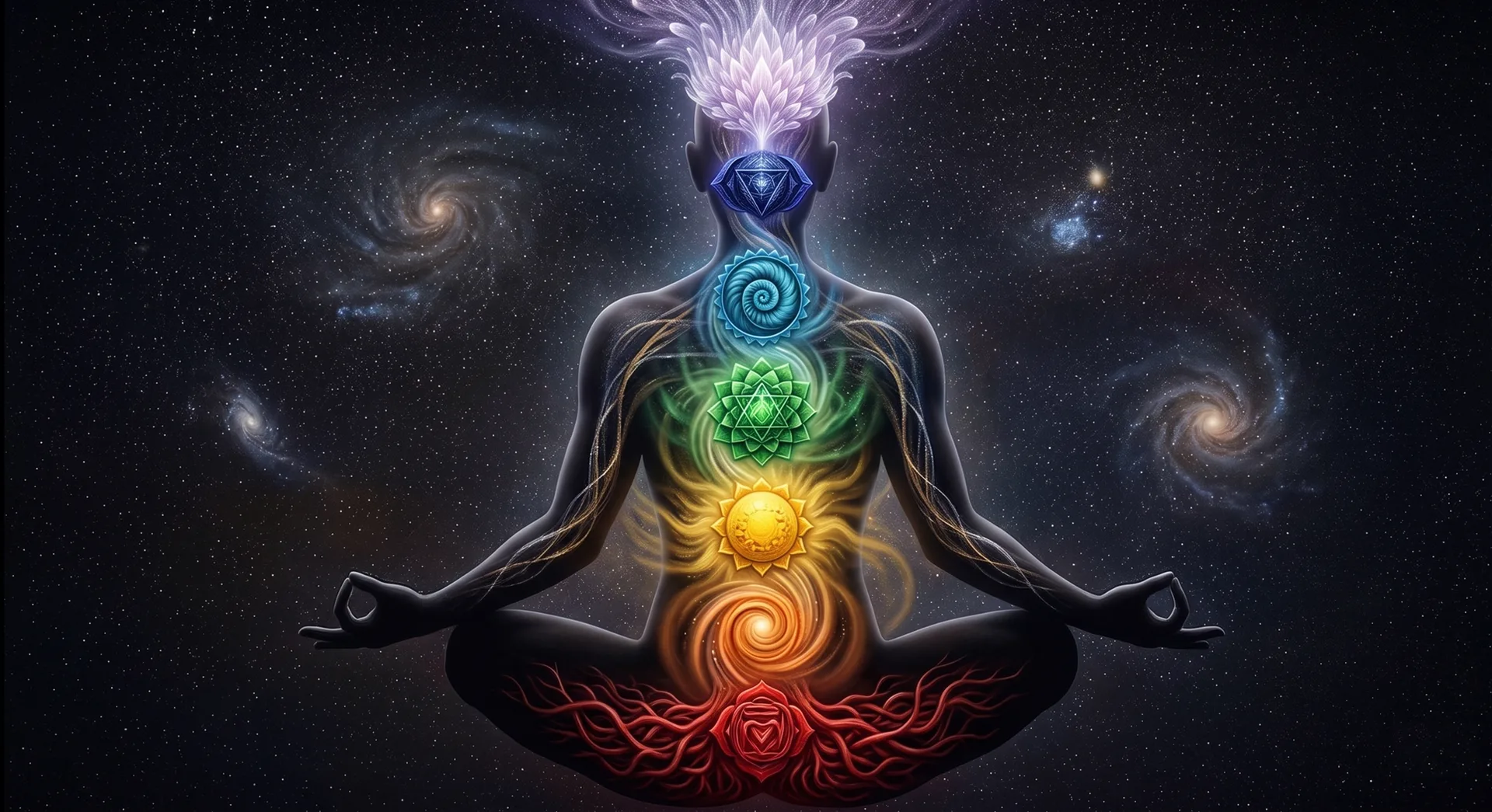
Chakra analysis is a unique methodology for analyzing personality and energetic state, based on calculations from the date of birth. It is a branch of numerology that helps to understand a person's inner world more deeply, identify energetic blocks, and establish balance among the seven main psychoenergetic centers—the chakras.
It is important to understand that chakra analysis is not fortune-telling, but a separate branch of numerology resting on a solid scientific foundation. The methodology is based on mathematical calculations and psychological principles, allowing for the creation of an individual energetic portrait. It is believed that the seven chakras form a person's aura, which is as important as the physical body and nervous system, and that the biofield exists thanks to constant nourishment from these energetic centers.
History and Origin of the Method
Chakra analysis as a methodology was founded by the Russian mathematician Alexander Bukhtoyarov. The method originated in the 1980s under the name Chronal-Vector Diagnostics (CVD), but only recently gained widespread popularity as chakra analysis.
"CVD is an extensive system for understanding a person's inner world using the date of birth. It incorporates disciplines such as numerology, biorhythmology, and socionics," — Alexander Bukhtoyarov.
Although the method uses names and concepts from Eastern philosophy (the seven chakras), it is not a direct transfer of the classical yogic system. Bukhtoyarov adapted these concepts for use with numerological calculations, creating a synthesis of Eastern knowledge and Western mathematics, which distinguishes it from traditional energy work practices.
What Chakra Analysis is Based On
The foundation of chakra analysis is a numerological calculation based on the date of birth. The methodology converts the numbers of the date into numerical values that correspond to the innate capacity of the seven main energetic centers.
Calculating the capacity of the energetic centers is very simple thanks to created online calculators, which perform all the mathematical operations independently. The resulting numerical data has a direct connection to a person's specific qualities and potential. The methodology analyzes the state of each of the seven chakras: from Muladhara, responsible for basic stability, to Sahasrara, associated with spiritual development.
What Chakra Analysis Reveals
By conducting a chakra analysis, you receive a detailed map of your energetic landscape. The results of the chakra diagnostics reveal several key aspects of personality and destiny.
- The State of Each of the Seven Chakras: Shows the innate capacity of the energy centers, determining which are developed, which require attention, and which are in a hyperactive state.
- Energetic Portrait and Personality Type: Calculates typology, character, temperament, and level of emotional intelligence.
- Karmic Tasks and Ancestral Programs: Allows one to uncover a person's natural qualities, see development potential from the perspective of past incarnations and current life tasks.
- Strengths and Weaknesses: Clearly outlines innate talents and areas requiring work, including potential health risks.
- Potential in Relationships, Career, and Health: Provides information about sexual potential, favorable directions for realization, natural talents, and possible areas of success.
How Chakra Analysis Differs from Other Methods
Chakra analysis is often compared to other esoteric and psychological practices, but it has fundamental differences. It is a diagnostic tool focusing on the current energetic state, not on predicting events.
"If classical numerology shows a general portrait, then chakra numerology provides a map of energy distribution, indicating where your resource is and where the block is," — Natalia Ladini, author of the "Destiny Matrix" method.
| Method | Primary Focus | Difference from Chakra Analysis |
|---|---|---|
| Classical Pythagorean Numerology | Analysis of personality traits through a numerological code | Provides a general description, whereas chakra analysis shows the specific distribution of energy across centers and identifies blocks. |
| Destiny Matrix (Natalia Ladini) | Life scenarios and archetypal patterns through 22 energies | Shows what life scenario awaits you, while chakra analysis shows what energetic state you are in to realize it. |
| Astrology | Influence of planets on destiny and character | Works with planetary positions, predicts trends. Chakra analysis is based solely on the date of birth and diagnoses the current state. |
| Eastern Practices (Yoga, Ayurveda) | Harmonizing chakras through exercises, breathing, meditation | These are practices of influence. Chakra analysis, however, is a primary diagnosis that can help select the necessary practices. |
How to Perform a Chakra Analysis
There are three main ways to undergo a chakra analysis, each with its own advantages.
Independently by Date of Birth
Theoretically, the calculation can be done manually by converting the date of birth into numerical values using special formulas. However, this process requires training and is prone to errors, so it is not recommended for most people.
Via an Online Calculator
This is the fastest and most accessible method. You only need to enter your exact date of birth into a special form, and the algorithm will instantly generate a full report with a breakdown. Take a free chakra analysis on specialized platforms, which eliminates calculation errors and provides a basic, yet quality interpretation.
With a Professional Consultant
Consulting a numerologist specializing in Chronal-Vector Diagnostics ensures the deepest analysis. The specialist will not only decode the numbers but also consider the interconnections between the chakras, provide personal recommendations for harmonization, and answer your questions.
How to Read Chakra Analysis Results
Deciphering the results of a chakra analysis is the key step that turns numbers into practical insights for your life.
Breakdown for Each Chakra
Each chakra is assigned a numerical value reflecting its innate capacity and activity. For example, a high value for Muladhara indicates good vitality and stability, while a low value suggests possible fears and grounding issues. Similarly, the state of Anahata (love, compassion) and Sahasrara (spiritual connection) is analyzed.
What "Open," "Blocked," and "Hyperactive" Chakras Mean
You may encounter these terms in a report. An "open" chakra functions optimally. A "blocked" chakra has a low energy level, limiting the corresponding qualities. A "hyperactive" chakra operates with excess, which can manifest as obsession or excessive control in the related area of life.
What to Focus on First
Start by analyzing the weakest chakra—it often points to the main area for growth. Then study the strongest one—this is your key resource. It's important to look at imbalances between chakras (e.g., overdeveloped will with weak feelings) and check how well the conclusions align with your life experience.
Applying Chakra Analysis in Life
Chakra analysis is not just a diagnosis, but a tool for practical change. It is used for deep self-knowledge, helping to understand true motives and internal conflicts. The method is effective for working with emotions, as it shows which energy centers are responsible for your reactions, fears, or outbursts of anger.
In the realm of planning, chakra analysis helps in making balanced life decisions, choosing a suitable profession, or direction for development. Based on the results, you can precisely select harmonization practices: meditations for Ajna, breathing exercises for Anahata, physical practices for Muladhara. Furthermore, the method is used to analyze compatibility in partnership, family, and business relationships, revealing energetic resonances and potential conflicts.
Chakra Analysis for Self-Knowledge
Chakra analysis serves as a powerful tool for self-knowledge, allowing you to look beyond the superficial layers of personality. It helps you see the energetic patterns that shape your behavior and reactions. For example, if you notice you often experience anxiety or insecurity, the analysis might reveal an imbalance in Muladhara (the root chakra), responsible for the sense of safety and stability. This is not just an abstract concept—energetic patterns manifest in everyday situations, such as a tendency to procrastinate or avoid risks.
The connection of chakras to emotional reactions and behavior is key to understanding yourself. Each chakra is associated with specific emotions: Anahata (heart chakra) is linked to love and compassion, Vishuddha (throat chakra) to self-expression and honesty, and Manipura (solar plexus) to will and self-esteem. When a chakra is blocked or hyperactive, it can lead to emotional outbursts, such as anger with a Manipura imbalance or depression with Anahata issues. By analyzing these connections, you can realize why you react in certain ways in stressful situations and begin working with the root causes, not just the symptoms.
Practical steps for using the results for self-work include regularly tracking your states. Start by keeping a journal where you note which emotions and situations cause discomfort and relate them to the corresponding chakras. For example, if you feel fear of public speaking, it might indicate a block in Vishuddha. Then apply targeted practices, such as affirmations to build confidence or voice-opening exercises. It's important not just to diagnose an imbalance, but to integrate the insights into daily life, gradually transforming energetic patterns through conscious choice and action.
Chakra Analysis for Solving Life Tasks
Chakra analysis offers a unique perspective for solving life tasks by linking energy centers to specific life areas such as career, relationships, and health. This connection is based on each chakra governing certain aspects of our existence. For instance, Muladhara (root chakra) is linked to basic needs, including financial stability and physical survival, while Anahata (heart chakra) influences interpersonal connections and emotional intimacy.
To understand which chakra is responsible for which area, it's important to know their primary functions. Muladhara is associated with earth and the material world, so it directly affects career and finances. Manipura (solar plexus) is linked to personal power and ambition, making it key for professional growth and decision-making. Anahata governs love and compassion, affecting all types of relationships—from romantic to familial. Svadhishthana (sacral chakra) is responsible for creativity and pleasure, influencing hobbies and sexuality, while Vishuddha (throat chakra) is for communication and self-expression, important for public speaking and negotiations. Ajna (third eye) is linked to intuition and vision, aiding in strategic planning, and Sahasrara (crown chakra) to spirituality and life's meaning.
Examples of applying chakra analysis to problem-solving clearly demonstrate its practical value. Financial blocks are often linked to imbalances in Muladhara or Manipura: if Muladhara is weak, a person may experience chronic insecurity about the future, leading to unwise spending; if Manipura is blocked, it may manifest as a lack of motivation for career advancement. Relationship problems, such as distrust or emotional closedness, usually point to an Anahata imbalance, requiring work on openness and acceptance. Fear of speaking or expressing one's opinion often stems from Vishuddha, which can hinder professional environments or personal communication. By identifying these connections, chakra analysis allows not only for diagnosing problems but also for suggesting concrete paths to solve them through harmonizing the corresponding energy centers.
Chakra Analysis for Selecting Harmonization Practices
Based on chakra analysis results, you can precisely select harmonization practices, making the self-work process maximally effective and personalized. Specific meditations, mantras, and asanas are suitable for different imbalances. For example, for a Muladhara imbalance, which can manifest as anxiety or insecurity, grounding meditations focusing on connection to the earth are effective, the mantra "Lam" for stabilization, and asanas such as Tadasana (Mountain Pose) or Malasana (Garland Pose) to strengthen the root connection. For Anahata, if there are issues with heart openness, compassion meditations, the mantra "Yam," and asanas that open the chest, like Bhujangasana (Cobra Pose) or Ustrasana (Camel Pose), are beneficial.
The connection of stones, essential oils, and color therapy to specific chakras adds additional tools for harmonization. Each chakra is associated with certain colors and elements: Muladhara—red and earth, so stones like hematite or red jasper, and essential oils such as patchouli or vetiver help strengthen it. Anahata—green and air, so stones like malachite or rose quartz, and oils, e.g., rose or ylang-ylang, promote emotional balance. Vishuddha—blue and ether, for which lapis lazuli or aquamarine are suitable, and oils like eucalyptus or peppermint, which cleanse communication. Integrating these elements into daily rituals, e.g., wearing corresponding stones or using aromatherapy, enhances the effect of other practices.
Creating a personal work plan based on analysis results begins with identifying priority areas. After diagnosing imbalances, create a schedule including daily or weekly practices for each problematic chakra. For example, if blocks are identified in Manipura and Vishuddha, the plan might include a morning meditation on the solar plexus with the mantra "Ram," daytime breathing exercises for the throat chakra, and evening yoga focusing on relevant asanas. Add the use of stones or oils during the day, e.g., wearing citrine for Manipura and lapis lazuli for Vishuddha. Regularly track progress, adjusting the plan as harmonization occurs so it remains adaptive and meets your current needs. This approach turns chakra analysis from a theoretical diagnosis into a living practice leading to sustainable change.
Chakra Analysis in Relationships and Compatibility
Chakra analysis in relationships and compatibility allows for a deeper understanding of the dynamics between people, going beyond superficial characteristics. Comparing the energetic portraits of two people is based on analyzing the state of their chakras—which centers are harmonious and which are blocked or hyperactive. For example, if one partner has a strong, balanced Anahata (heart chakra) and the other's is blocked, this can create an imbalance in emotional giving, where one feels more open than the other. Such analysis helps not just to state differences but to understand their energetic roots, which can be key to resolving conflicts or strengthening the bond.
Intersections of chakras between people can create either harmony or conflict, depending on their state and resonance. Harmony arises when chakras complement each other: for instance, if one person has a developed Vishuddha (throat chakra), promoting honest communication, and the other has Anahata, providing emotional support, this can lead to deep mutual understanding. Conflicts often arise from dissonance: if both partners have a hyperactive Manipura (solar plexus), linked to will and control, this can result in power struggles within the relationship. By analyzing these intersections, potential friction can be anticipated and worked on softening through joint practices, such as meditations to synchronize energy centers.
Applying chakra analysis for couples and for understanding relatives or colleagues expands its usefulness in various social contexts. In partnerships, it helps identify areas for growth; for example, if both partners have a weak Muladhara (root chakra), it may indicate shared fears about stability worth working on together. In family relationships, analysis can explain why tension arises with certain relatives—perhaps due to conflicting chakras, such as a hyperactive Vishuddha in one and a blocked one in the other, leading to misunderstandings. In the business sphere, chakra analysis is useful for forming effective teams: for example, combining people with strong Ajna (third eye) for strategic vision and developed Manipura for implementation can increase productivity. The link to a chakra compatibility calculator, such as check chakra compatibility, simplifies this process by providing a tool for quick assessment and recommendations based on entered data, making analysis accessible even for beginners in energy practices.
Chakra Analysis for Health and Psychosomatics
Chakra analysis for health and psychosomatics reveals the deep connection between energy centers and the physical body, offering a holistic approach to well-being. Each chakra is associated with specific organs and body systems, forming a map of influence. For example, Muladhara (root chakra) is linked to the adrenal glands, spine, and legs, affecting overall vitality and immunity. Anahata (heart chakra) corresponds to the heart, lungs, and chest, impacting the cardiovascular and respiratory systems. Vishuddha (throat chakra) governs the thyroid gland, throat, and neck, playing a role in metabolism and communication on a physical level. This connection is not accidental—it reflects the principle of unity of soul and body, where energetic blocks can manifest as physical symptoms.
How a block in a chakra manifests in physical symptoms can be traced with specific examples. If Muladhara is blocked due to chronic stress or fear, it can lead to problems with the lower back, arthritis, or frequent colds as signals of insufficient grounding. An imbalance in Svadhishthana (sacral chakra), linked to reproductive organs and kidneys, can manifest as gynecological issues, low libido, or urinary system disorders, often rooted in suppressed emotions or creative blocks. When Manipura (solar plexus) is hyperactive, typical for people prone to perfectionism, it can cause digestive disorders like ulcers or irritable bowel syndrome, reflecting internal tension. These manifestations emphasize that physical ailments often have an energetic underpinning, and work at this level can complement traditional treatment.
Determining when to see a doctor and when to work with energy requires a balanced approach. Chakra analysis does not replace medical diagnosis but serves as a valuable complement. If you experience acute or severe symptoms, such as intense pain, high fever, or signs of serious illness, it is paramount to see a doctor to rule out physiological causes. However, for chronic or recurring conditions that find no explanation in standard tests, such as persistent fatigue, migraines, or psychosomatic disorders, working with energy through chakra analysis can be effective. For example, if headaches are linked to a block in Ajna (third eye), meditations or color therapy may bring relief. By integrating both approaches—medical for the body and energetic for the spirit—you create a comprehensive health strategy where chakra analysis helps address root causes, promoting long-term healing and prevention.
Chakra Analysis vs. CVD Diagnostics
It is important to distinguish between these two concepts. Chronal-Vector Diagnostics (CVD) is the complete, original system developed by Alexander Bukhtoyarov. Chakra analysis is its simplified and adapted version, focused specifically on diagnosing the seven chakras.
CVD includes broader analysis: typology, synastry (compatibility), karmic tasks, biorhythms, and vectors of destiny. Chakra analysis serves as an excellent starting point for self-knowledge, while CVD is a comprehensive tool for deep work with destiny and purpose. Both methods complement each other, and many consultants use them in conjunction.
Who Performs Chakra Analysis
Consultations on chakra analysis can be conducted by specialists who have undergone special training in the CVD system. These can be numerologists, energy consultants, psychologists, or coaches who have integrated the methodology into their practice.
"Chakras are not an abstraction, but dynamic patterns that shape our perception of reality. Their diagnosis through numbers gives an amazingly accurate map of the psyche," — Anodea Judith, "Wheels of Life" (1987).
Training usually includes a basic course on calculations and interpretation, an advanced level on working with karmic aspects and synastry, and supervised practice. When choosing a consultant, pay attention to their experience, certifications, and client reviews.
Frequently Asked Questions
From what age can chakra analysis be done?
Chakra analysis can be done at any age, as the date of birth remains unchanged. For children, it can help understand innate inclinations and talents; for adults, current tasks and blocks. The analysis is most informative for people who have already encountered life challenges and are seeking paths for development.
Can chakra analysis be done multiple times?
Yes, it can. Your basic energetic portrait, calculated from your date of birth, remains unchanged throughout life. A repeat analysis may be needed to verify data, study an aspect more deeply, or analyze compatibility with another person. Online calculators allow you to do this an unlimited number of times.
How does free online chakra analysis differ from a paid consultation?
Free online analysis provides an automatic, standard breakdown for each chakra, which is excellent for an initial introduction to the method. A paid consultation with a specialist involves deep individual interpretation, consideration of interconnections between chakras, answers to personal questions, and the creation of a personal harmonization plan.
Can chakra analysis predict the future?
No, and this is a key difference from fortune-telling methods. Chakra analysis does not predict specific events. It diagnoses your current energetic state, innate potentials, and blocks. By understanding them, you yourself can make more conscious decisions that will shape your future.
What to do if serious blocks are identified in the results?
Identifying a block is not a verdict but an indication of an area for growth. Based on the results, you can select practices for harmonization: meditations, work with affirmations, physical exercises, art therapy, or consultations with a psychologist. Often, work begins with the weakest or most blocked chakra to restore the basic energetic flow.
How accurate is chakra analysis?
The accuracy of chakra analysis, like any numerological method, depends on the correctness of the calculations and the depth of interpretation. The mathematical part is accurate and objective. Interpretation, however, requires an understanding of the person's life context. Many note a high correspondence of the results to their internal feelings and life situations, making the method a valuable tool for reflection.
Chakra analysis opens the door to deep and structured self-knowledge, allowing you to see yourself through the lens of energy and potential embedded in your date of birth. It is a practical tool for those who want to move through life consciously, understanding their strengths and transforming weaknesses. To get your personal energetic map, take a free chakra analysis online—this is the first step towards harmony and realizing your true purpose.